Skip to content

The UIU Advantage

Looking for a major with endless possibilities? Whether you plan to jump directly into a rewarding career or pursue graduate studies or professional studies, a Biology degree from UIU is your ticket to a bright future. UIU’s student-centered approach to learning allows you to tailor your undergraduate experience to your unique professional and educational goals.

UIU Biology majors learn from respected faculty who are experts in the fields they teach. Small class sizes ensure that students receive individualized attention from faculty, including one-on-one advising to complete requirements for your professional school application.

Why Biology at UIU?

With six exceptional areas of emphasis to choose from, including General Biology, Life Science, Medical Lab Sciences, Pre-Chiropractic, Pre-Nursing and Pre-Professional/Health Science, you’ll graduate with the knowledge, skills and hands-on experience needed for real-world application and success.

Explore Your Program

Biology Courses

See course descriptions for the classes you need for your Biology degree, as well as any general education requirements.

Academic Calendar

Keep up with your academic program’s registration deadlines, session dates, holiday breaks and exam schedules.

Careers in Biology

Prepare for employment or continued education in a variety of fields, such as biotechnology, laboratory research, industrial biology, organismal (plant or animal) biology, medicine, physician assistant studies, physical therapy, veterinary medicine, pharmacy, dentistry and nursing.

Courses

Biology Core

The biology major offers “Core Quality” structured around core classes that provide the foundation of the biological studies. From there, the biology major has six emphases: General Biology, Medical Laboratory Science, Pre-Chiropractic Articulation, Pre-Professional/Health Science, Pre-Nursing, and Life Science. These emphases allow students to tailor their studies to individual career goals and provide them with “Choice Content.”

Students majoring in Biology must complete the 26-credit biological science core and the additional 25-43 credits in a specific area of emphasis. Only one emphasis area may be completed.

Requirements

  • BIO 135 – Principles of Biology I
  • BIO 140 – Principles of Biology II
  • BIO 283 – General Genetics
  • BIO 308 – Scientific Literature Skills and Writing for Research
  • BIO 381 – Cell and Molecular Biology
  • BIO 340 – Evolution
  • CHEM 151 – General Chemistry I
  • MATH 220 – Elementary Statistics

Total Credits: 27

General Biology Emphasis

The possibilities are wide and varied for an individual with a general biology emphasis. This emphasis prepares a student for a career in the biological sciences, plant or animal care and research, for positions in biological industry, and for entrance into graduate programs in biology. Skills in biology can also be combined with skills in art (medical illustration, molecular modeling), math (biostatistics, epidemiology), law (biotechnology patents), and public health (food safety, drug testing, and quality control) for even wider career paths.

Requirements

  • CHEM 152 – General Chemistry II

One of the following (3 Credits)

  • MATH 115 – Trigonometry and Analytic Geometry
  • MATH 120 – Calculus I
  • MATH 200 – Calculus II

Two of the following (8 Credits)

  • CHEM 251 – Organic Chemistry I
  • CHEM 252 – Organic Chemistry II
  • PHY 115 – Introduction to Physics I
  • PHY 116 – Introduction to Physics II

Electives

  • Electives in Biology numbered 200 or above (24 Credits; 12 credits of which must be 300 or above)

Total Credits: 39

Life Science Emphasis

The life science emphasis is intended for students who wish to go into scientific industry or for students who wish to combine a background in biology with other majors or minors for career preparation or as preparation for graduate study.

Requirements – One of the following (3 Credits)

  • MATH 105 – College Mathematics with Applications
  • MATH 107 – College Algebra
  • MATH 115 – Trigonometry and Analytic Geometry
  • MATH 120 – Calculus I
  • MATH 200 – Calculus II

Electives in Biology numbered 200 or above (20 Credits)

10 credits of which must be 300 or above.

Total Credits: 23

Medical Lab Sciences

Clinical or medical laboratory scientists collect and analyze samples to aid in the diagnosis and appropriate treatment of patients with disease. This emphasis prepares a student for entrance into programs certified by the National Accrediting Agency for Clinical Laboratory Sciences (NAACLS). For example, UIU graduates have furthered their careers through the Medical Laboratory Science Program at the Mayo Clinic.

Requirements

  • BIO 210 – Microbiology
  • BIO 268 – Introduction to Human Anatomy and Physiology
  • CHEM 152 – General Chemistry II
  • CHEM 251 – Organic Chemistry I
  • CHEM 252 – Organic Chemistry II
  • CHEM 330 – Biochemistry I

One of the following (3 Credits)

  • MATH 115 – Trigonometry and Analytic Geometry
  • MATH 120 – Calculus I
  • MATH 200 – Calculus II

One of the following (3–4 Credits)

  • BIO 330 – Vertebrate Histology
  • BIO 370 – Pathophysiology
  • BIO 375 – Immunology
  • BIO 396 – Molecular Tools I – DNA Techniques
  • BIO 397 – Molecular Tools II – Cell Biology and Protein Techniques
  • BIO 420 – Cancer Biology

Total Credits: 29–30

Pre-Chiropractic emphasis

This emphasis allows students to take advantage of the articulation agreements with institutions offering a doctorate in chiropractic degree and enter the chiropractic institution after three years at Upper Iowa University. Students completing the emphasis will receive their degree in biology from Upper Iowa University after completion and transfer of first year coursework specific to the institution with which the articulation is held.

Requirements

  • BIO 270 – Human Anatomy and Physiology I
  • BIO 275 – Human Anatomy and Physiology II
  • CHEM 152 – General Chemistry II
  • CHEM 251 – Organic Chemistry I
  • CHEM 252 – Organic Chemistry II
  • PHY 115 – Introduction to Physics I
  • PHY 116 – Introduction to Physics II

One of the following (3 Credits)

  • MATH 115 – Trigonometry and Analytic Geometry
  • MATH 120 – Calculus I
  • MATH 200 – Calculus II

Total Credits: 31

Pre-Nursing Emphasis

After successfully completing 90 credits including the Biology Core, the courses in this emphasis, and fulfilling all of The Peacock Professional Experience (“general education”) requirements, a student may matriculate at Allen College into the Accelerated BSN program and transfer 30 credits from their first year back to UIU to reach 120 credits and graduate from UIU or complete the last 30 credits to reach 120 at UIU. In either case, the student will receive a B.S. degree with a major in Biology from UIU.

Note: In order to matriculate into the Accelerated BSN at Allen College, the student must have CNA certification.

Requirements

  • BIO 165 – Human Biology and Nutrition
  • BIO 210 – Microbiology
  • BIO 270 – Human Anatomy and Physiology I
  • BIO 275 – Human Anatomy and Physiology II
  • EDU 142 – Human Growth, Development and Guidance
  • PSY 190 – General Psychology
  • PSY 360 – Abnormal Psychology
  • SOC 110 – Principles of Sociology
  • SOC 240 – Diversity in the United States

One of the following (3 Credits)

  • MATH 105 – College Mathematics with Applications
  • MATH 107 – College Algebra
  • MATH 115 – Trigonometry and Analytic Geometry
  • MATH 120 – Calculus I
  • MATH 200 – Calculus II

Total Credits: 33

Additional Articulation Requirement

Admission to the Allen College Accelerated BSN Program requires 6 credit hours in the Humanities (ART, MUS, THE, ENG, PHIL, HIST, REL, COMM, or Cultures). Students attending Allen College as a part of this articulation must take an additional course in this area outside of The Peacock Professional Experience (“general education”) requirements. Please work with your academic advisor to ensure this requirement is met.

Pre-Professional/Health Science Emphasis

This emphasis prepares a student for entrance into professional programs such as medicine, pharmacy, dentistry, optometry, chiropractic, physical therapy, occupational therapy, and veterinary medicine programs. The addition of a minor in chemistry can provide even more robust preparation for professional programs. Visit uiu.edu/academics/pre-professional-students for more information and a comparison of courses commonly required by professional programs.

Requirements

  • CHEM 152 – General Chemistry II

Two of the following (8 Credits)

  • CHEM 251 – Organic Chemistry I
  • CHEM 252 – Organic Chemistry II
  • PHY 115 – Introduction to Physics I
  • PHY 116 – Introduction to Physics II

One of the following (3 Credits)

  • MATH 115 – Trigonometry and Analytic Geometry
  • MATH 120 – Calculus I
  • MATH 200 – Calculus II

Select electives from the following (24 Credits)

  • BIO 210 – Microbiology
  • BIO 270 – Human Anatomy and Physiology I
  • BIO 275 – Human Anatomy and Physiology II
  • BIO 301 – Individual Research in the Biological Sciences
  • BIO 303 – Experience in Health Science Careers
  • BIO 330 – Vertebrate Histology
  • BIO 370 – Pathophysiology
  • BIO 375 – Immunology
  • BIO 396 – Molecular Tools I – DNA Techniques
  • BIO 397 – Molecular Tools II – Cell Biology and Protein Techniques
  • BIO 420 – Cancer Biology
  • BIO 498 – Thesis Research
  • CHEM 251 – Organic Chemistry I
  • CHEM 252 – Organic Chemistry II
  • CHEM 330 – Biochemistry I
  • CHEM 331 – Biochemistry II
  • PHY 115 – Introduction to Physics I
  • PHY 116 – Introduction to Physics II

Total Credits: 39

Anna Winter ’20 – Fayette Campus

PhD Student, University of California, Berkeley

Chemistry, Mathematics, Biology, Volleyball

About UIU’s Biology Degree Program

What is a Biology degree?

UIU’s bachelor’s degree in Biology provides students with an understanding of fundamental concepts and principles in the biological sciences. At UIU, Biology majors engage in rigorous academic study paired with practical and theoretical laboratory-based training that prepares them for rewarding careers.

A minor in Biology is also available if you’re interested in the subject but plan to major in another area.

How to apply

To apply, visit our Online Application portal to create an account and start your application. Still unsure if a Biology degree is right for you? Reach out to our admissions office to ask specific questions or request additional information.

Career Opportunities & Benefits

Careers in Biology

A bachelor’s degree in Biology opens the door to a variety of careers. UIU’s areas of emphasis guide Biology majors toward the path that best suits their interests and future goals. Graduates pursue jobs in clinical,medical, academic or industrial laboratories, or continue their studies in graduate or professional school.

A Biology degree can help prepare you for job titles like:

  • Laboratory Technician
  • Researcher
  • Veterinarian
  • Biomedical Engineer
  • Chiropractor
  • Environmental Conservationist
  • High School Science Teacher

Before you start your job search, remember to visit the UIU Office of Career Development for complimentary services that can help you find the perfect job.

Biology Salary Information

Salaries for graduates with a bachelor’s degree in Biology vary based on factors like job title, location and years of experience. According to the Bureau of Labor Statistics, some average salaries for professionals in biology-related careers include:

  • Clinical Laboratory Technician – $54,180[1]
  • Veterinarian – $99,250[2]
  • Biomedical Engineer – $92,620[3]
  • Environmental Conservationist – $64,010[4]
  • High School Science Teacher – $62,870[5]
  • Zoologist – $66,350[6]

Benefits of a Biology Degree

Biology majors are highly sought-after in the job market. Undergraduate opportunities for research and first-hand exposure in the field help you develop practical skills that can be applied across a wide range of professions and industries.

Skills and concepts in biology can also be combined with art (medical illustration and molecular modeling), math (biostatistics, epidemiology), law (biotechnology patents), and public health (food safety, drug testing and quality control) for other career paths.

Degree Requirements, Skills & Certifications

Biology Courses

UIU’s engaging curriculum covers a broad range of topics in the field of biological sciences. An expansive course selection, including six areas of emphasis, helps Biology majors develop specialized areas of interest in preparation for professional pursuits.

Some core corses in Biology are:

  • Principles of Biology
  • Evolution
  • General Genetics
  • Molecular Tools
  • General Chemistry
  • Cell and Molecular Biology

Biology Skills

UIU’s rigorous Biology degree program ensures graduates enter the workforce with the essential hard and soft skills necessary for professional success. A few examples include:

  • Investigative
  • Research/Quantitative
  • Analytical
  • Communication
  • Critical Thinking
  • Problem Solving

Best Minors for Biology Majors

UIU offers an array of minors that complement a bachelor’s degree in Biology. Selecting a minor provides an opportunity to explore a related interest while enhancing your resume. Some minors commonly paired with a biology degree include:

Frequently Asked Questions (FAQs)

What can I do with a general biology major?

A general Biology major prepares you for a career in the biological sciences, plant or animal care and research, for positions in biological industry, and for entrance into graduate programs in biology. A Biology degree can also be combined with skills in art, math, law and public health for even wider career paths.

How long does it take to get a biology degree?

At UIU, you can complete your bachelor’s degree in Biology in about four years. Students pursuing entry into articulated chiropractic or nursing programs can complete the UIU portion of their coursework in either 3 or 4 years.

UIU’s unique course schedule breaks the academic year into eight-week sessions and an accelerated six-week summer session. This allows you more time to focus on your courses and balance your academic life with your other commitments. Learn more about UIU’s course schedule.

Can you become a chiropractor with a biology degree?

UIU offers a Chiropractic emphasis, which is a 3+1 articulation with Palmer, Logan University and Northwestern Chiropractic Colleges. The first year at the Chiropractic program is used to complete the requirements for the biology major at UIU.

How does the Pre-Nursing Emphasis work with UIU’s articulation agreement with Allen College?

After successfully completing 90 credits including the Biology Core, the courses in this emphasis, and fulfilling all of UIU’s general education requirements, a student may matriculate at Allen College into the Accelerated BSN program and transfer 30 credits from Allen College back to UIU to reach 120 credits and graduate from UIU, or complete the last 30 credits (including BIO 496) to reach 120 at UIU. In either case, the student will receive a B.S. degree with a major in Biology from UIU. Credit transferred from Allen College replaces BIO 496 in the core for 3+1 students, but BIO 496 must be taken at UIU if the student completes the entire major at UIU.

Note: In order to matriculate into the Accelerated BSN at Allen College, the student must have CNA certification

UIU Locations for Bachelor's Degree in Biology

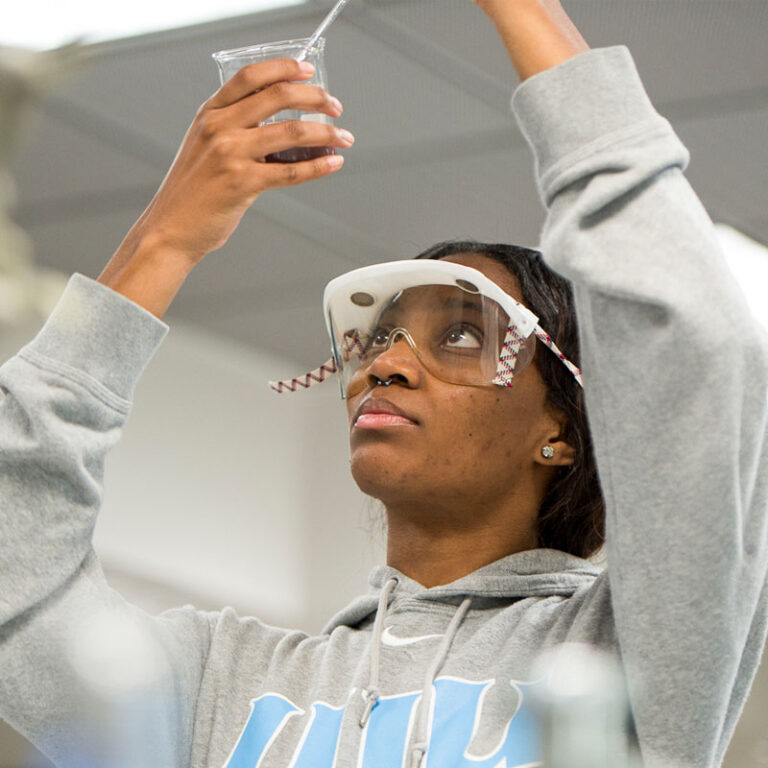
UIU student in a lab using a pipette to do an experiment.

Convenient, Focused Scheduling

UIU Biology students have the advantage of focusing on fewer classes at once with the Two-at-a-Time schedule.

Admissions

When you’re ready to apply for your bachelor’s degree in Biology, we’re ready to help you every step of the way.

Or Try This

If Biology is not quite what you are looking for, check out our Chemistry program.

paul-skrade-classroom

Dr. Paul Skrade

Associate Professor of Biology

“I feel incredibly fortunate to get to work with students in the field sciences programs (Conservation Management, Biology, and Environmental Science) at Upper Iowa University. We are able to get students outside and learning hands-on field techniques in specialized classes that are traditionally found at much larger universities.”